
Rooted in history
A reflection on the rich legacy of campus trees after the loss of an ancient elm
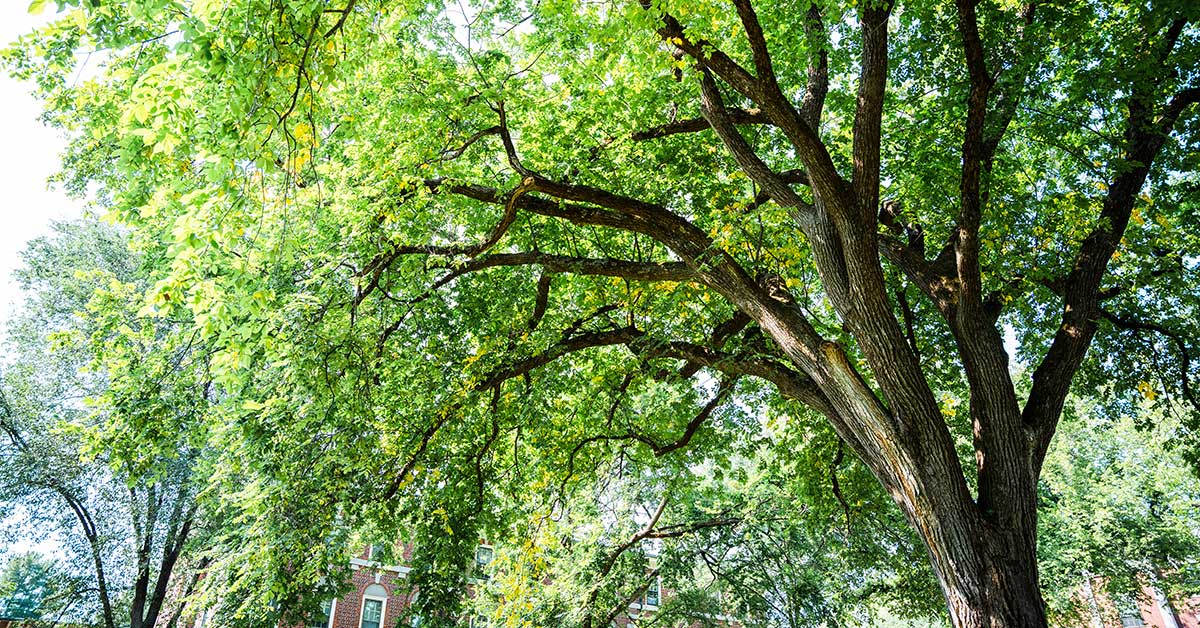
Trees occupy a central place in the story of Wheaton College. An apple tree sits at the center of the college seal. Knapton Hall was built on the site of a former apple orchard. Indeed, the campus serves as an ad hoc arboretum of native and exotic specimens.
When a tree falls on the Wheaton campus, it is heard and mourned. Recently, the college lost one of the stately American elm trees that shade the Dimple and lend the space a sense of serenity and stability.
A late spring storm brought down the beloved giant that stood across from the southeast corner of Knapton Hall. The 75-foot elm, weakened by root rot, succumbed to an apparent microburst. The National Weather Service recorded 55 mph wind gusts that caused widespread damage in the community. The storm knocked out electrical power to half of Norton, according to the Attleboro Sun Chronicle. The wind damaged fencing in front of the Presidents’ House, flung a pedestrian crossing sign from the roadway onto campus and blew down numerous small limbs and a carpeting of green leaves.
“Wheaton’s trees are a vital part of the college community and ecosystem,” said President Michaele Whelan. “It is sad to see such a magnificent tree brought down and the gap in the Dimple canopy. It prompts us to reflect on and appreciate the natural beauty of our campus.”
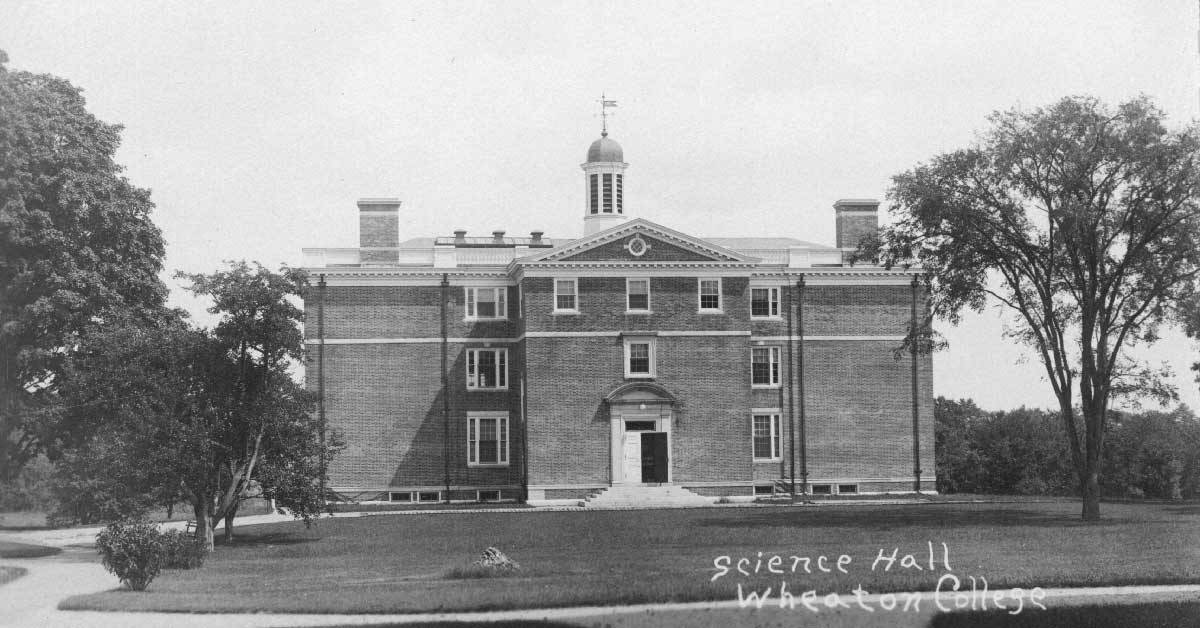
The papers of noted Wheaton tree champion Professor of Philosophy Holcombe Austin, which are stored in the college’s archives, indicate the current elms in the Dimple were planted in the 1880s. Archive photos show the tree and its siblings in maturity in 1913, shortly after the construction of Knapton. The tree outlasted historic storms and survived the mid-twentieth century Dutch Elm Disease epidemic that nearly wiped out the species, Ulmus americana. Its long survival testifies to the regular preventative treatments and dedicated care provided by college staff and consulting arborists.
The community’s care extends to all the college’s trees, said President Whelan who pointed to the tradition of graduating classes planting a class tree, a practice that goes back to the start of the 20th century.
“When we consider that generations of Wheaton students celebrated milestones by planting trees, it becomes clear that these are more than features of the landscape,” she said. “They represent hope, continuity and a commitment to the future. Each tree embodies the idea that we are part of a larger story—one that stretches back to those who came before us and forward to those who will follow.”
In 2009, seniors Sierra Flanigan and Chad Mermelli revived a part of Wheaton’s lost landscape, establishing a campus apple orchard. With support from classmates, alumni and parents, the pair led the effort to plant more than 40 trees behind and to the side of the Presidents’ House. Children from the Early Education Center have used the fruit in recent years to make applesauce.
More recently, the college planted two serviceberry trees, one in front of Mary Lyon Hall, to celebrate the Class of 2029, who read the book The Serviceberry: Abundance and Reciprocity in the Natural World. The author Robin Wall Kimmerer focuses on the plant, Amelanchier, which is native to temperate regions of North America and provides food for animals, to draw life lessons of interconnectedness and sustenance from the natural world.
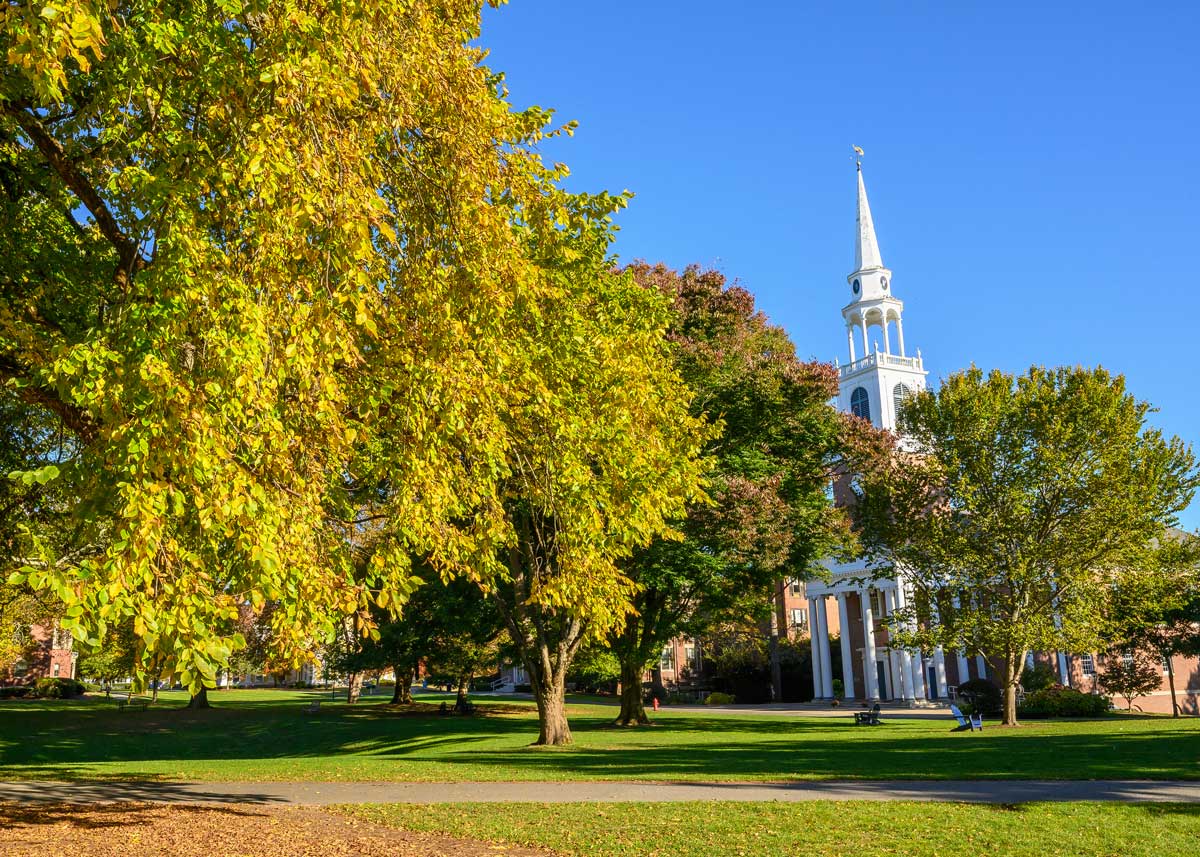
The loss of the elm is a reminder that while even the most enduring features of campus are not permanent, their legacy can continue through careful stewardship. Today, that commitment to preserving and enhancing the landscape continues through the Holcombe Austin Campus Ecosystem Fund. Gifts to the fund support the care of the trees that define spaces such as the Dimple, as well as the broader landscape surrounding the residences that shape daily life on campus. Alumna Helen Powell ’65 who has provided funding to plant evergreens and care for the Wheaton ecosystem is one of those stewards who seeks to preserve the beauty of the campus.
Funding to maintain and enhance the college’s built environment also has been and continues to come from alumni, parents and friends who make gifts to the Building Preservation & Campus Enhancements Fund. This fund maintains and revitalizes Wheaton’s campus by modernizing classrooms, residence halls, and shared spaces that inspire creativity and collaboration.


