
Wheaton College computer science major wins NOAA Hollings Scholarship
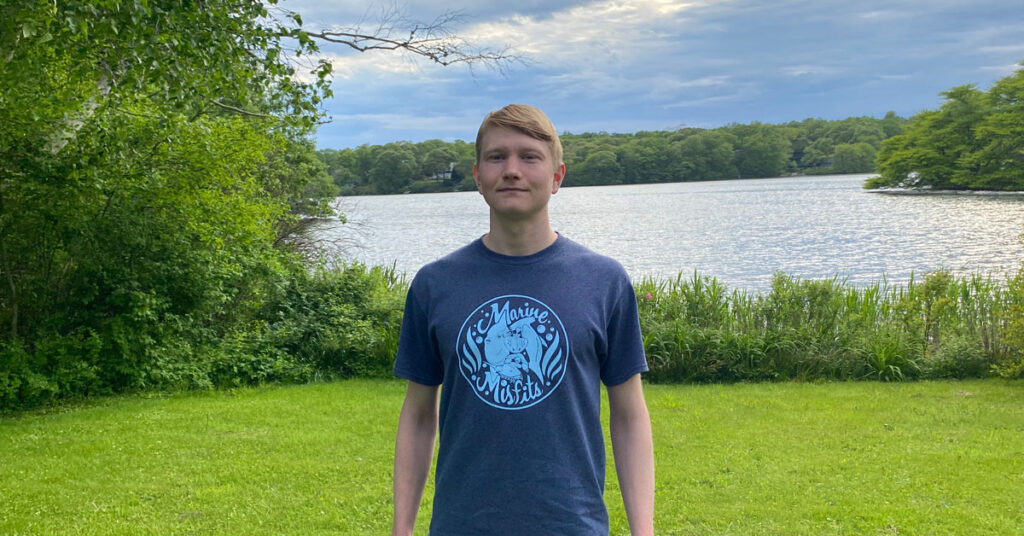
Mark Davidson ’28 has been selected as an Ernest F. Hollings undergraduate scholar by the National Oceanic and Atmospheric Administration (NOAA). The computer science major will receive a two-year academic scholarship, a summer internship with the NOAA in 2027 and funding to participate in up to two national scientific conferences.
“I hope to learn how to use artificial intelligence, machine learning, and programming to address climate problems,” Davidson said. “I also hope to inspire others to care for the environment.”
Davidson is one of 128 Hollings Scholars selected nationwide from a pool of 829 applicants. The scholarship provides academic assistance of up to $9,500 each year and a full-time 10-week paid internship, through which he will receive experience in NOAA-related science, research, technology, policy, management and education activities. Awards also include travel funds to attend a NOAA Scholarship Program orientation and the annual Science & Education Symposium, scientific conferences where students present their research, as well as a housing subsidy.
“The effort I put into my application truly paid off,” he said. “I’m excited about the future and relieved to have secured an internship for the summer after my junior year.”
The Falmouth, Mass., resident majoring in computer science found the scholarship while researching scientific organizations on Cape Cod. “NOAA is based in Maryland, but they have a facility in Woods Hole [located in Falmouth], so I thought they might have a local opportunity,” said Davidson. “ NOAA covers research from climate science and meteorology to marine biology and ocean exploration.”
Since he was in middle school, Davidson has been concerned about climate change and wanted to help combat it. “Growing up in a coastal town, I saw how erosion and rising sea levels disrupted my community,” he said.
With 68 miles of diverse shoreline in Falmouth, the community experiences flooding not only in coastal storms but also during peak high tides ( known as king tides). This results in the erosion of beaches, sand dunes, and roadways; destruction of salt marsh ecosystems and damage to sewers, septic systems and other utilities.
On campus, Davidson has served as an executive board member of Wheaton’s Running Club for nearly two years, and was appointed the club’s president for 2026–27, and also participates in the Wheaton Democrats and the Outdoors Club.
He credits several Wheaton staff and faculty members to help him develop his career path.
“I’m grateful for Career Navigator Karen Single at the Life and Career Design Institute, who helped me navigate the complex world of finding internships,” said Davidson, who has been guided by his academic advisors and professors.
His major advisor Michael Gousie, Visiting Instructor Nicholas Almeder and others in the computer science and math departments “ challenged me to apply theoretical knowledge to real-world situations and to approach problems creatively,” he said. Domingo Ledezma, associate professor of Hispanic studies and Davidson’s Mentored Academic Pathway advisor, encouraged him to minor in Hispanic studies.
With guidance from Single in the LCDI, Davidson was introduced to New England Coastal Wildlife Alliance (NECWA), where he will intern this summer as a field research assistant on its Southcoast Terrapin Project. The effort aims to conserve and protect the Diamondback Terrapin. Working mainly in Pocasset, Mass., he and fellow interns will locate nesting females on beaches and marshes, track hatchlings, document population data, and protect turtles from environmental hazards and predators.
“I also hope to develop an app that will allow users to report sightings of stranded animals to NECWA and other organizations,” he said.
Ultimately, Davidson hopes that his education and experience will enable him to become a data scientist or software developer focused on environmental science. “I want to use advocacy and technology to support vulnerable communities, such as those on Cape Cod, and help build a sustainable future,” he said.
What is the NOAA Hollings Undergraduate Scholarship?
Established in 2013, NOAA’s Ernest F. Hollings Undergraduate Scholarship program aims to bolster undergraduate training in oceanic and atmospheric science as well as increase environmental literacy. It is named in honor of the former U.S. Senator Ernest F. Hollings, who championed ocean conservation. He was instrumental in the enactment of landmark ocean protection laws, including the Marine Mammal Protection Act and the Sustainable Fisheries Act. More than 2,300 undergraduates from 450 colleges nationwide have received the scholarship since it’s inception.