
Experiential learning on campus
Classroom startup creates diabetes app
At 4 years old, Kate Boylan ’04—Wheaton’s digital initiatives librarian—received a life-altering diagnosis: Type 1 diabetes.
Since then, she has increasingly relied on technology to help manage her blood sugar level. She currently uses an insulin pump, and for the past three years has worn a continuous glucose monitoring system that provides real-time glucose data, enabling her to manage her condition every hour of every day.
Boylan’s experience inspired the creation of a new course, “Startup v1.0–Medical Devices, Mobile Apps and Machine Learning.” In this course, 20 students—primarily seniors and computer science majors—functioned like a startup company, with the goal of developing an app to help patients with diabetes.
When Boylan offered to provide months of glucose data to Professor of Computer Science Mark LeBlanc, he knew he had the basis for an exciting class that would blend computer science and personalized health.
Unlike a traditional class, LeBlanc’s course simulated the real-world environment of a business.
“We expect students when they graduate to be totally ready for the workplace. This is a time to practice for the real world,” LeBlanc said.

During the course, students were challenged to learn new skills, like how to program an iPhone using Apple’s new programming language, Swift. They also learned to code in R (a statistical language that helps analyze and visualize data) and SQL (a language for querying databases).
In addition, the students gained experience in product design and marketing. They came up with a name for their company, GluGo, along with a logo to brand their product.
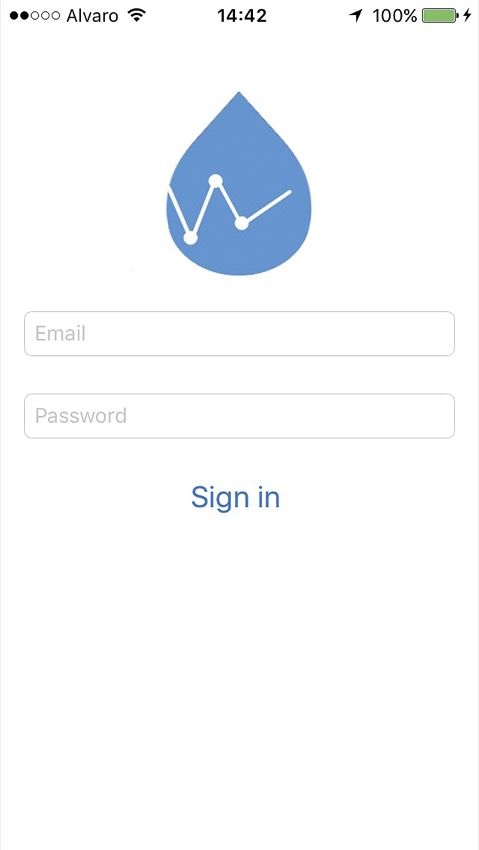
The development of the app involved many moving parts. To help manage the tasks, the students divided themselves into smaller groups.
Saba Mundlay ’17, a political science major and computer science minor, was part of the group building the database for storing the glucose information of Boylan and the other patients.
“We are working with Flask, a framework to set up a path between our database and any program that can make an HTTP request, like a website or a phone. It allows users to access the database remotely so it doesn’t have to be downloaded on their individual computers,” she said.
Liam Grace-Flood ’17, a double major in art and math, provided expertise on design and product conceptualization. “I also have extensive statistical experience, so I’ve been supporting other students’ statistical work,” he said.
Startups typically benefit from people skilled in a variety of disciplines, Grace-Flood said. This course “is a step in the right direction in promoting experiential and collaborative learning in Wheaton’s curriculum.”
The class’s success, as in any business, relies on the ability of the “workers” to collaborate well, Mundlay said. “You’re talking about balancing the goals, opinions, schedules and skills of 20 students. It brings insight into what it might be like working at a tech startup.”
LeBlanc said students make mistakes and fail at times during this course—an experience common in the private sector. “Even if it goes badly, this is a really safe place for it to go badly. It’s not so safe later,” he said.
Boylan said she hopes the students learn the value of data sharing and the importance of technology in helping patients like her. She plans to showcase the students’ work on the college’s digital platforms.
“I’m hoping innovations in technology will result in serious advances,” she said. “Having students recognize how technology influences innovation and change is what entrepreneurship is all about.”
Keith Nordstrom photos