
Crafting stories of sustainability
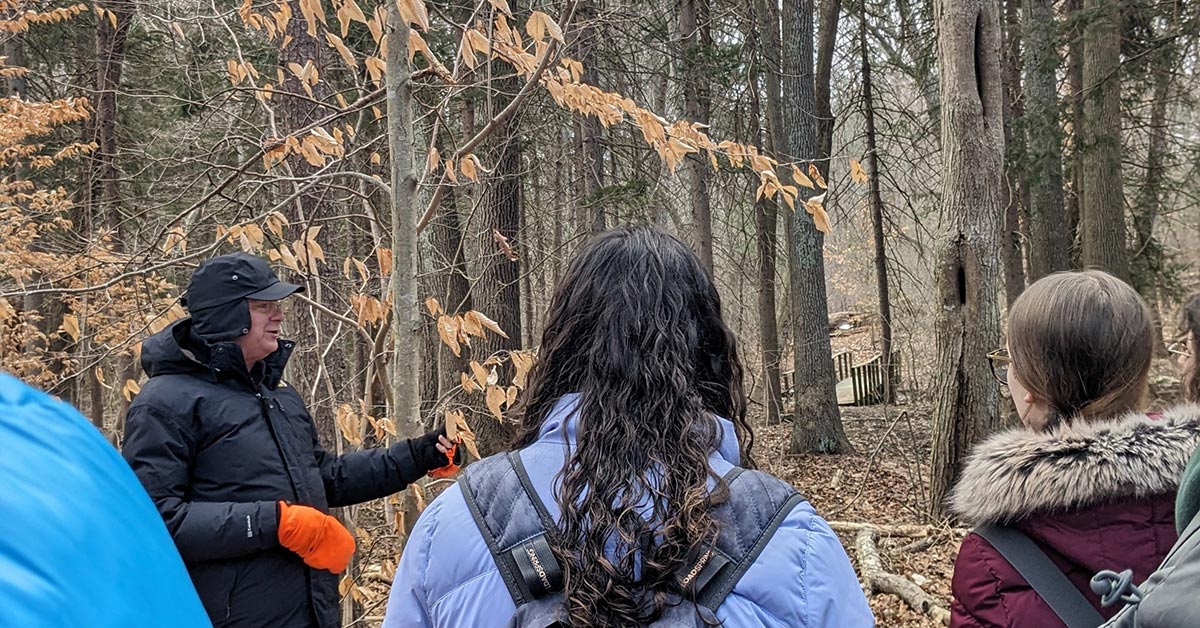
Foundation grant will fuel the development of a new interdisciplinary course that combines environmental studies with the storyteller’s art.
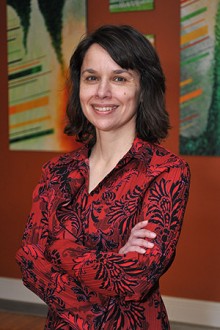
Professor of English Lisa Lebduska recently won a grant from the Marion and Jasper Whiting Foundation to create a new course that will guide students in developing the skills to craft compelling stories about environmental sustainability—and, in the process, contribute to the visibility of eco-friendly efforts.
The proposed course aims to equip students with the skills to research, interview and write about environmental issues and local sustainability efforts, emphasizing the power of storytelling to inspire action. Lebduska noted that individuals can influence global conversations and outcomes through personal initiative and voice, citing the impact that Swedish teenager Greta Thunberg has had in calling attention to climate change.
“My project draws on initiatives that have undertaken environmental storytelling in ways that make global issues palpable through the telling of local narratives,” said Lebduska, who also serves as director of College Writing and chair of the English and Philosophy Department. “The course will help students harness their power to effect positive change through storytelling, while emphasizing skills in observation, perspective, approach, interviewing and narrative.”
The new course builds on Lebduska’s existing “Writing the Environment” class, which attracts students from a wide range of majors and introduces them to environmental writing across genres. The new course will focus specifically on sustainability initiatives and community-based storytelling, with students producing profiles of environmental activists, examining arguments for and against sustainability initiatives and creating multimedia narratives about local efforts.
To develop the course, Lebduska plans to conduct site visits to two leading programs: the University of Pennsylvania’s “My Climate Story” initiative and the University of Toronto’s sustainability-focused writing and community partnership programs. At Penn, she plans to attend a workshop led by project founder Bethany Wiggin and interview participants about their experiences as “climate correspondents.” At Toronto, she hopes to observe classes, meet with faculty and students, and study the university’s campus-wide sustainability efforts, including its “living lab” model.
“These visits will allow me to see how storytelling, research and community engagement come together in real-world settings,” Lebduska said in her application, emphasizing the importance of in-person observation for understanding place-based environmental work.
Beyond the classroom, Lebduska plans to connect students with alumni working in environmental fields, an effort on which she will collaborate with the college’s Life and Career Design Institute. Students would also collaborate with local organizations to highlight regional sustainability efforts. She also will be considering methods for sharing the students’ stories beyond the campus, creating opportunities for their work to broaden public understanding of environmental problems and possible solutions.
The proposed course aligns with several academic programs at Wheaton, including the writing studies and rhetoric concentration, existing programs in environmental science and environmental studies as well as a developing experiential learning minor.
Ultimately, Lebduska hopes the course will empower students not only to understand environmental issues, but to communicate them in ways that resonate with audiences and inspire change.
“Sustainability work is inherently place-based,” she said. “It is through stories—grounded in lived experience—that we can make the possibilities for hope and action as real as the ground beneath our feet.”