
No, I am not a bot
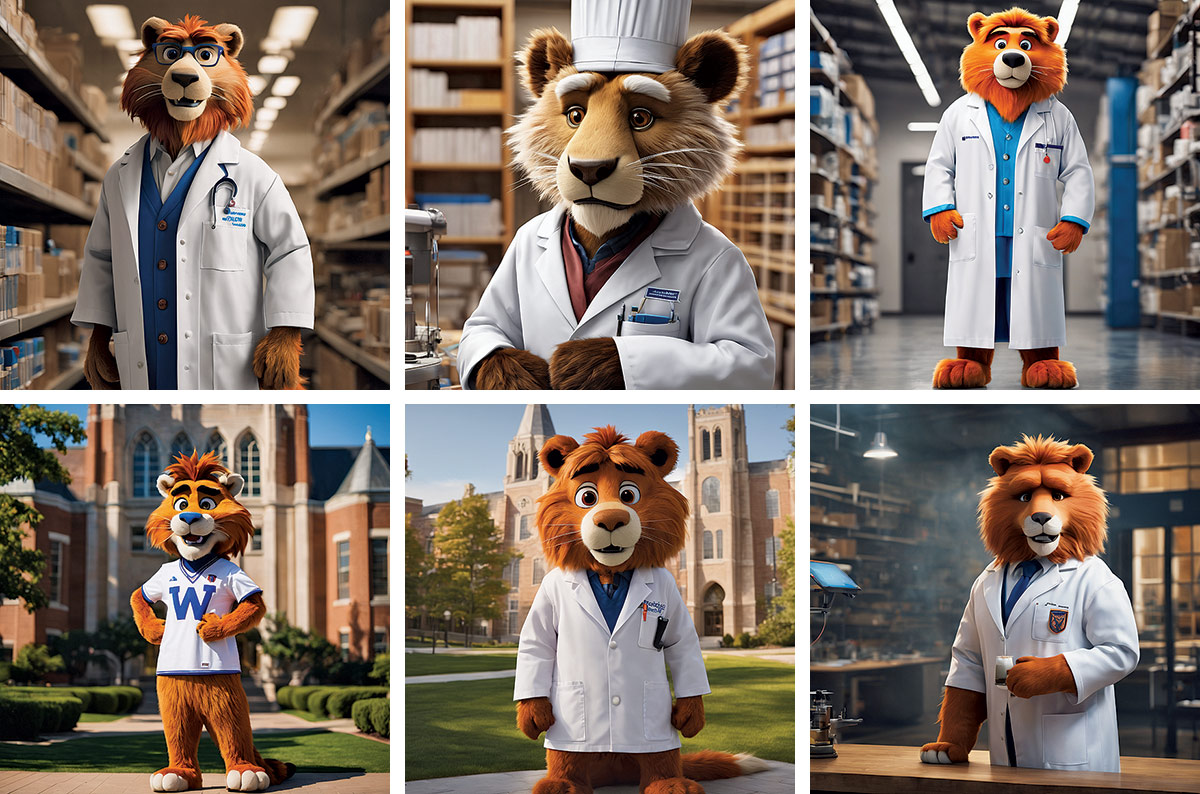 Playing around with artificial intelligence tools while researching our cover story has been fascinating and fun.
Among the things I learned from one tool I tried out is that AI has a sense of humor as well as audacity.
For example, when I began navigating the complexities of Midjourney and had to sign up to use it, the system responded with: “Wait! Are you human? Please confirm that you’re not a bot.”
How dare you?! What audacity for a bot to ask me to click on a box that said “Yes, I am human.”
After I assured it that I am, indeed, human (mostly), I laughed when I got to the long list of things in the popup box citing what signing up would allow the bot to do. The one thing it could not do? “Microbrew some local kombucha.” Funny.
Also hilarious were the renditions of Roary that were produced when I asked AI tools to generate images of our mascot dressed in various ways, including in a nurses uniform.
Another AI tool, Google Bard, was really sweet in right away assuring me that:
“Bard isn’t human. It doesn’t have its own thoughts or feelings, even though it might sound like a human. Remember: Bard can’t replace important people in your life, like family, friends, teachers or doctors. Bard can’t do your work for you. Bard can’t make important life decisions for you.”
Thanks for keeping it real, Bard.
Ted Nesi ’07, who is the politics and business editor and an investigative reporter at WPRI-TV in Providence, R.I., did a great job writing the story about how Wheaton professors and students are using AI in coursework.
This issue of the magazine also features stories about an exhibition that showcased Wheaton’s long-lasting relationship with Bhutan and interviews that Associate Professor of Film and New Media Patrick Johnson conducted with students who were filmmakers in residence around the globe.
Enjoy.