
Research quantifies how often birds steal nesting material from other birds
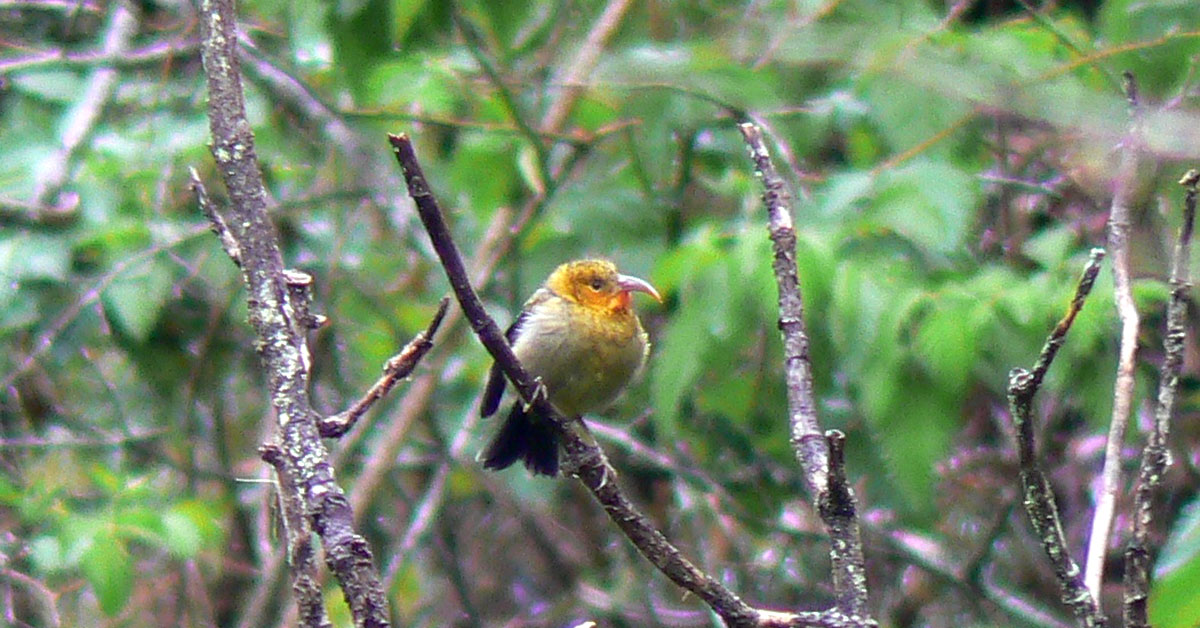
An observation that Associate Professor of Biology Jessie Knowlton and her colleagues made during fieldwork on the Island of Hawaii led to the first published study that quantifies bird burglary.
People do it, bees do it, and birds do it, too … steal, that is.

Ornithologists, conservationists and astute birdwatchers have long known that birds take food, nesting materials, or even shiny objects from other birds, animals or humans. Many a beachgoer, for example, has lost snacks to a wily seagull. But until recently, scientists had not focused much attention on understanding how widespread bird-versus-bird burglary might be. A newly published study by a team of researchers, including Wheaton College Associate Professor of Biology Jessie Knowlton and her colleague Erin E. Wilson Rankin, an entomologist at the University of California, Riverside, suggests that it’s a fairly common strategy.
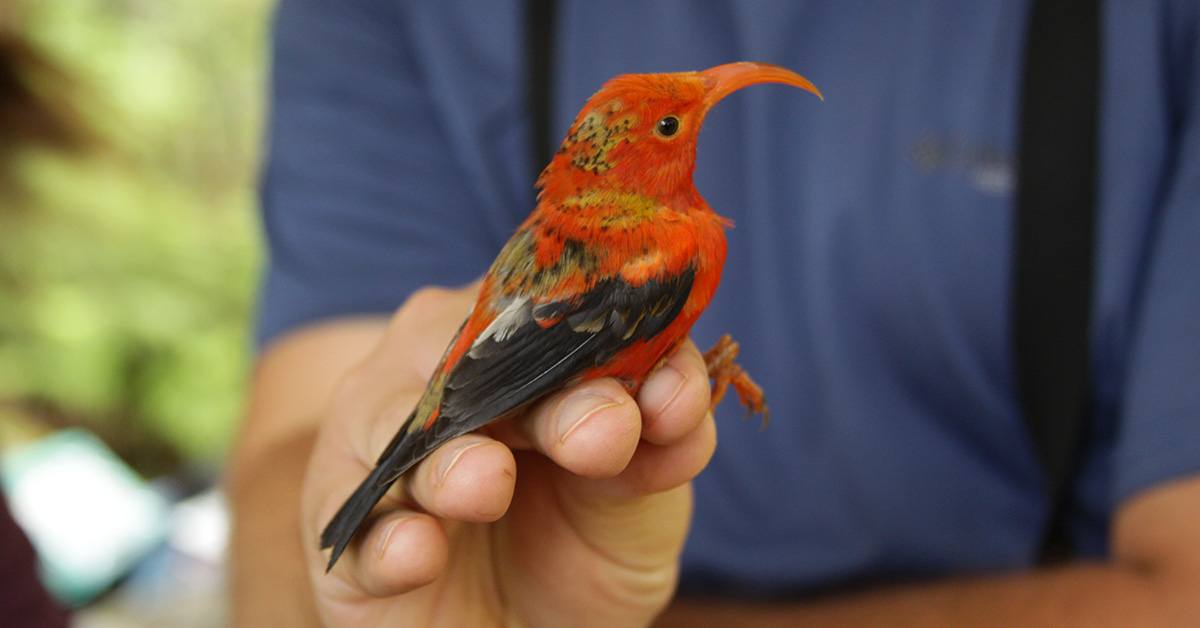
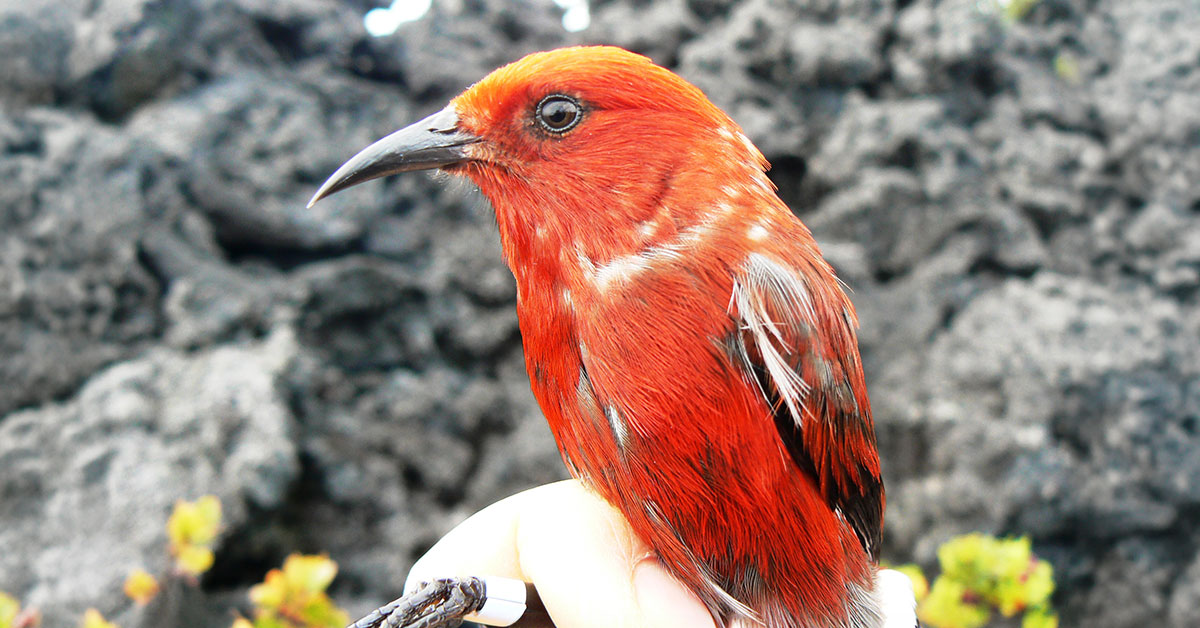
The study released in the journal American Naturalist reported that three species of honeycreepers (Apapane, Iiwi, and Hawaii Amakihi) on the Island of Hawaii pilfer nest-building material from each other and from other birds living in the forest fragments (kipuka) that remain high up on the slope of the Mauna Loa volcano. The work has gained significant attention. Of 216 nests, the team documented 39 incidents of theft. In writing about the research, The New York Times noted that it was the first study to quantify the frequency with which birds steal nesting material from each other.
How did this research project get started?
I was hired as a postdoc—right after I got my Ph.D.—as the lead on bird research for a large collaborative National Science Foundation grant to investigate how invasive black rats on the Island of Hawaii impact native food webs, including native arthropods and native birds. There’s not much native forest left for these species to use because all of the lower parts of the island have been overrun with invasive plants and animals.
So, the question about whether and how much birds were stealing nest material from each other was not your main focus?
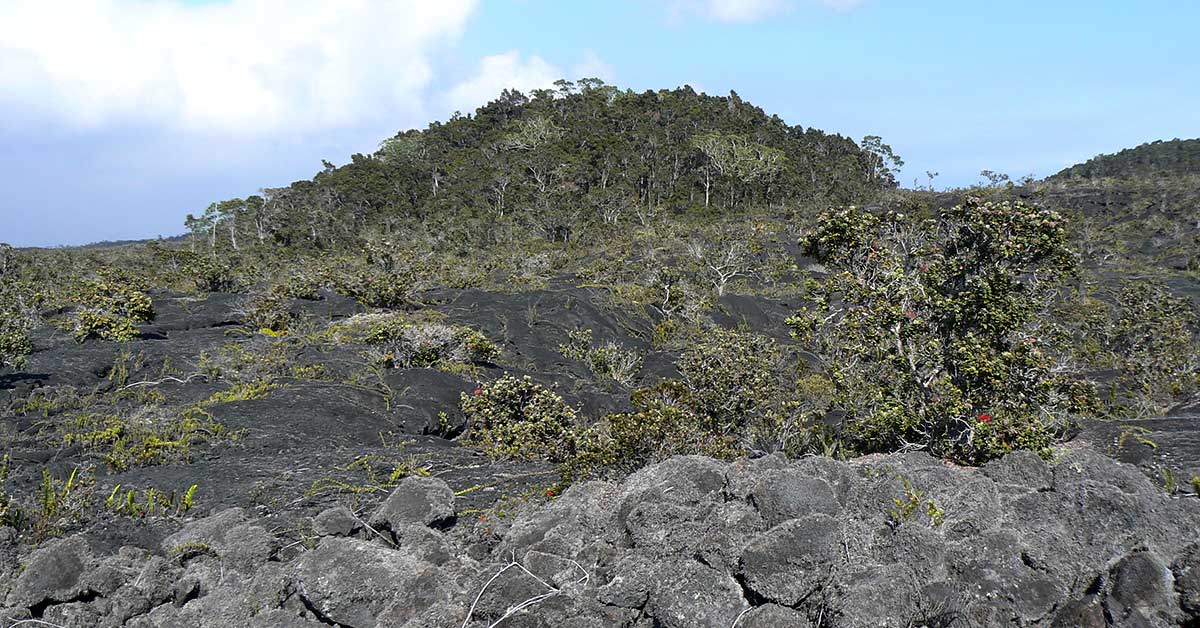
No, it started as an observation that we made during the course of our field work. The project involved trapping black rats out of half of 32 native forest fragments on the slopes of Mauna Loa that were not destroyed by an old lava flow. We were studying the impact on the arthropods and the native Hawaiian birds of removing the black rats. So we were looking for the bird’s nests and monitoring them, and that’s when we noticed that this thievery was occurring.
Catching birds engaged in theft
How did you collect the data?
We watched each nest for about 45 minutes at a time so that we could see what stage it was in. If the parents were bringing food, it means there are chicks. If they’re just sitting on the nest for extended periods, there are likely eggs. During the course of watching the nests, we saw other birds coming and taking material.
How long did it take to collect data on 216 nests?
This occurred over the course of a six-month field season. We would get there at dawn and usually not leave until it was almost dark, five days a week. We had a field crew that was quite large— eight field assistants.
It was fun, but hard. There was a lot of hiking, a lot of really long days. I would pick up the field crew at 3:30 a.m. so that we could be in place at dawn. And first we had to hike out over this lava field that’s really sharp and rough. But it’s a beautiful site. You can’t complain about being out there. The views everywhere—you could see the slope of the volcano, the ocean in the distance.
Findings from the research
What were the nest materials the birds were stealing and why?
They’re long strands of a native fern or other material. They’re weaving this material into a soft cup nest, so it has to be fine, soft, the right size. It makes sense for them to take it from another bird who’s already done that work, because that saves them a lot of time.
Why is it significant to understand this behavior?
This is going on a lot more than we realized, and I think it’s important because it shows that nest building actually takes a significant amount of time and energy. And when birds can minimize that, then they’re going to.
I don’t think it’s necessarily just indicative of there being few resources on that island. But it does show that this behavior is common, and it could affect the birds whose nest material is being stolen.
The Apapane are the most abundant of the native Hawaiian honeycreepers at the study site. And if they’re always stealing from the other, less common honeycreepers, that could be a problem for the less common ones.
What the findings mean for conservation
How does this connect to your broader research into human impact on the environment?
Birds are more intelligent and more adaptable than we often think they are, but sometimes they can get into trouble when we change their environment and they’re not evolved to deal with the change. Anything that’s going to make their life easier in terms of making their nest, they will try to use—even our trash. But that can be a problem, if they end up using plastic or even human hair that can get wrapped around the feet of the birds or the chicks and cut off blood supply. So it’s really not good when they use human-made materials. But they will because they’re trying to save time and energy. And we have trash everywhere, unfortunately.
Has this topic come up in your classes?
I just taught a course on “Ornithology,” and it did come up in the class about behavior, intelligence and deception. The students are really into it. I had 44 students, and most of them became birders. It was just so fun. It helps to have real examples of research that I’ve done, especially because they’re interested in strange bird behaviors.
Strange bird behaviors?
There’s nest parasitism from brown-headed cowbirds that never make their own nests. They’re always laying their eggs in other species’ nests and letting the other species raise their young. There’s also deception. Crows, jays and magpies will cache food, but if they see that somebody is watching them, either a human or another bird, they’ll pretend to put it in one spot and then hide it somewhere else. So it’s this whole theory-of-mind thing. They can imagine what the other bird is thinking, so it takes a higher level of intelligence.
Interesting. Do you think birds know it’s “wrong” to steal?
I don’t think they view it as wrong, but they do view it as dangerous, so therefore they must know that the other bird doesn’t like it. Because if they get caught, they will get attacked by the other bird or at least chased away.
We saw a little bit of chasing. Hawaiian honeycreepers are much more mellow and less aggressive than most other birds that I’ve studied, so we didn’t see any outright physical fights like you would see with species around here. Maybe that’s why they do it more there—because there’s not enough of a deterrent.