
Fellowship puts professor at center of Matisse studies
Professor Ellen McBreen, an art historian whose work focuses on 19th- and 20th-century art, design and visual culture, has been awarded a two-year fellowship at the Baltimore Museum of Art (BMA), which holds the world’s largest public collection of works by the French modernist Henri Matisse.
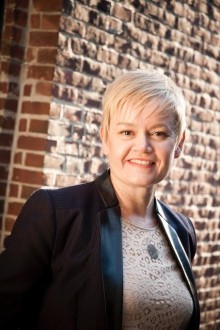
McBreen is the second scholar to be awarded a fellowship at the museum’s Ruth R. Marder Center for Matisse Studies, which opened in 2021.
The two-year fellowship offers the opportunity for deep and extended engagement with the museum’s extensive holdings of the innovative and influential Henri Matisse. The BMA is home to more than 1,600 objects by the artist. The museum’s collection began with Baltimore art patrons, Claribel and Etta Cone, whose early-20th-century acquisitions form the core of the museum’s holdings, which have been expanded with purchases and gifts, including from the Matisse family.
“The Baltimore Museum of Art is an institution that I’ve admired for so many years, and it’s a critical hub for anyone who studies Matisse, so it’s a real gift to be awarded a fellowship that formalizes my relationship to it,” said McBreen, who estimates she has visited the institution dozens of times for her scholarship.
The art history professor began the fellowship in fall 2025, and she is already at work with the center’s director, Katy Rothkopf, planning for a future major exhibition of Matisse slated for the museum.
Drawing on scholarly expertise
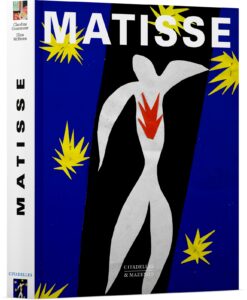 The announcement of McBreen’s appointment comes on the heels of the publication of Henri Matisse (Citadelles et Mazenod, 2025), which she co-authored with Claudine Gramont, head of the graphic arts department at the museum and cultural complex Centre Pompidou in Paris, France, and former director of the Matisse Museum in Nice, France. Their large-format monograph, a detailed study of the artist’s 65-year career, was published in French; the English language version of the book remains for the future.
The completion of the monograph coincided with the end of copyright restrictions on the artist’s works. That bit of fortuitous timing enabled McBreen and her co-author to include images representing every aspect of Matisse’s long career.
“The book looks amazing. It has 350 color reproductions,” she said, noting that the book’s first printing is in French and awaits an English language printing.
The newly published book adds to McBreen’s growing list of scholarly works. Previously she co-edited and contributed essays to Matisse in the Studio (MFA Publications, 2017), which accompanied an exhibition of the same name at the Museum of Fine Arts, Boston, for which she served as co-curator. She is also the author of Matisse’s Sculpture: The Pinup and the Primitive (Yale University Press, 2014), a study that examines Matisse’s sculptural practice, its relationship to modernism and the artist’s engagement with African sculpture.
Opening new windows on Matisse
McBreen completed the research and writing of the monograph during the 2024–25 academic year while on sabbatical in France. During that time, she also co-curated an exhibition, “Open Windows,” which is scheduled to debut in October at Mudec, the Museum of Cultures, in Milan. The show traces the ways in which Matisse’s work was inspired and influenced by travel in Spain, Morocco and Tahiti.
During her research in France last year, McBreen was among the first to view newly discovered photographs that Matisse took during his trips to Morocco and Tahiti.
“For me, the photographs were revelatory because he took a lot of pictures that are not the kinds of photographs that a European who is seeing a city like Tangiers for the first time would take,” she said. “I love the fact that the photographs that he made show the intermingling of European and traditional Moroccan architecture. They show a racially diverse city with women in modern French outfits crossing paths with veiled women. It’s a great diary of what he saw and experienced.”
The Mudec exhibition, the first major Matisse exhibition in Italy in a decade, will include selections from the photographs he made and objects he collected while traveling as a counterpoint to the art that was inspired by his journeys, including interactions with the people and culture of those places.
“I think the photographs are a great way to approach the paintings and to understand a little bit more about the experiences that he had in Morocco and Tahiti,” McBreen said.
Connecting museum and classroom
The exhibition that McBreen plans to organize for the BMA will require time to take shape. She said much of the early work involves negotiating loans of artworks from other institutions around the globe, a process that can take several years to complete. There also will be a catalog to create and publish, as well as the design of the exhibition itself.
Looking at the work that lies ahead, the professor said that her teaching provides an excellent background for organizing an art exhibition that will explore new aspects of Matisse’s life and work while ensuring that it is accessible to the general public.
“Being a professor really, really guides my curating choices. I always ask myself, ‘How would I explain this to a Wheaton student?’” McBreen said. “When you’re studying something like European art history, you can’t take for granted that the value proposition of what you’re teaching will be automatically accepted.”
This semester, for example, McBreen is teaching a senior research seminar that will use Matisse’s work as a jumping off point for exploring various scholarly approaches to art, from traditional biography to psychoanalytic, feminist and post-colonialist interpretations, among others.
“During the course of the semester, we will be reading multiple scholars who are in conversation with one another taking up a similar set of questions from different perspectives and time periods,” she said. The students will then select a topic for their own research, applying the different methodologies they have learned.
The importance of close analysis of image as well as word extends well beyond the classroom and the museum, McBreen said. “Students are more comfortable with being critical about what they read than the images they see. But it’s also a survival skill for democracy and free thinking to be able to apply critical thought to images as well.”